


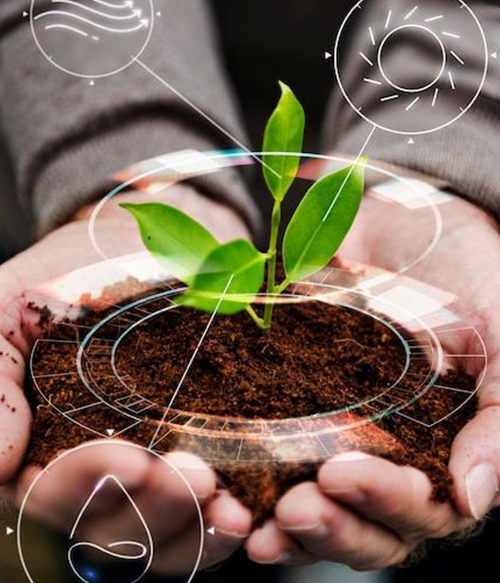
Smart Farming Technologies
7 Smart Farming Technologies Revolutionizing Agriculture
The future of farming isn’t coming – it’s already here. What if the secret to higher yields, lower costs, and healthier crops wasn’t just in the soil, but in the technology managing it? Traditional farming methods struggle to keep up with unpredictable weather, labor shortages, and rising operational costs.
That’s where smart farming technology steps in—turning data into decisions, automation into efficiency, and innovation into real results. Here’s what we’ll cover:
- What smart farming technology is and why it’s changing agriculture
- Key innovations like IoT, AI, and automation that are shaping the industry
- How technology boosts productivity, sustainability, and food security—with real-world examples
P.S. Hawa Agri helps farmers, engineers, and land developers integrate advanced agricultural solutions with 8,000+ products and expert consulting—from irrigation systems to precision agricultural tools that make farming smarter.
The Top 7 Emerging Smart Farming Technologies in Agriculture
1. Internet of Things (IoT) in Agriculture
Farming isn’t just about intuition anymore. Real-time data is transforming how decisions are made, and IoT technology is at the center of it all. Smart sensors now track soil health, weather patterns, and crop conditions with pinpoint accuracy. Instead of guessing when to water or fertilize, farmers get instant insights straight to their devices, ensuring every action is backed by data.
I. Smart Sensors for Soil, Weather, and Crop Monitoring
IoT-powered sensors are changing the game by providing:
- Soil moisture and nutrient tracking to prevent over or under-fertilization.
- Weather and climate monitoring to predict droughts, frost, and rainfall.
- Crop health analysis detects stress, disease, and growth rates.
This level of precision minimizes waste, boosts yields, and protects the environment—something traditional methods just can’t match.
II. IoT-Enabled Irrigation and Water Management Systems
Water is a finite resource, but IoT makes sure it’s used wisely. Smart irrigation systems use:
- Automated drip irrigation that adjusts based on real-time soil moisture data.
- Remote-controlled sprinklers that activate only when needed.
- Water usage tracking to prevent excess consumption.
Hawa Agri provides advanced irrigation systems designed for smart farming—ensuring water goes exactly where it's needed, cutting waste, and maximizing crop health.
2. Artificial Intelligence & Machine Learning
Farming used to rely on experience alone. Now, AI and machine learning processes vast amounts of data to make faster, smarter, and more accurate predictions. These technologies are redefining how farmers detect diseases, forecast yields, and make critical decisions.
I. AI-Driven Crop Disease Detection
A single outbreak of fungus or pests can wipe out an entire field. AI-powered tools use:
- Computer vision to scan plants for early signs of disease.
- Machine learning models are trained to recognize patterns in crop infections.
- Automated alerts that recommend treatment before the problem spreads.
Instead of reacting after the damage is done, AI helps farmers act before they lose a harvest.
II. Predictive Analytics for Weather and Yield Forecasting
Weather remains one of farming’s biggest uncertainties. AI makes it less of a gamble by analyzing:
- Satellite and sensor data to predict temperature shifts, storms, and droughts.
- Historical crop performance to estimate future yields.
- Pest migration patterns to prevent infestations before they start.
This tech means better planning, fewer losses, and higher profits—a game-changer for any farm.
3. Automation & Robotics
Farming is physically demanding, and finding skilled labor isn’t getting easier. Automation and robotics fill the gap by handling repetitive tasks with speed and precision, cutting labor costs while improving efficiency.
I. Autonomous Tractors and Drones
Self-driving tractors and drones aren’t sci-fi anymore. They’re actively working in fields today, offering:
- Autonomous plowing, seeding, and harvesting with minimal human input.
- Drones for crop spraying that reduce pesticide use by up to 30%.
- Aerial imaging that monitors plant health from above.
These technologies make farms more productive, cost-efficient, and sustainable.
II. Automated Greenhouse Monitoring Systems
Greenhouses are already highly controlled environments, but automation takes them further. Smart systems:
- Regulate temperature, humidity, and light based on plant needs.
- Adjust nutrient delivery for optimal growth.
- Use AI-powered cameras to detect underperforming plants.
P.S. Hawa Agri offers advanced agricultural machinery and agricultural automation tools to help farmers integrate smart technology seamlessly into their operations.
4. Precision Agriculture
Farming isn’t about working harder—it’s about working smarter. Precision agriculture is all about targeted, data-driven decision-making, ensuring that resources like water, fertilizers, and pesticides are used exactly where they’re needed—and nowhere else.
I. Data-Driven Decision-Making for Resource Efficiency
Gone are the days of guesswork. With precision agriculture, farmers use:
- GPS-guided tractors to map out fields with sub-inch accuracy.
- Soil health mapping to apply fertilizers only where needed.
- Satellite imagery to detect plant stress before it’s visible to the eye.
By applying resources only where necessary, farms reduce costs, waste, and environmental impact.
II. Precision Planting, Fertilization, and Pest Control
Precision tools ensure that:
- Seeds are planted at the ideal depth and spacing.
- Fertilizers are applied only to areas lacking nutrients.
- Pesticides target only affected plants, reducing chemical use.
This approach leads to higher yields, stronger plants, and healthier soil.
5. Smart Livestock Management
Managing livestock is no small task. Farmers need to track health, nutrition, and breeding cycles while preventing disease outbreaks. Smart livestock management uses wearable sensors, automated feeding systems, and AI-powered analytics to make the process more efficient and less labor-intensive.
I. Wearable Sensors for Health and Activity Monitoring
Just like fitness trackers for people, smart collars and ear tags help farmers keep an eye on their animals. These devices track:
- Body temperature and heart rate to detect illness early.
- Movement patterns to identify injuries or unusual behavior.
- Feeding and drinking habits to ensure proper nutrition.
With real-time alerts, farmers can act fast, reducing veterinary costs and preventing livestock losses.
II. Automated Feeding Systems for Better Nutrition
Smart feeding systems calculate exact portions based on an animal’s weight, age, and dietary needs. These systems:
- Deliver precise amounts of feed at scheduled intervals.
- Reduce waste and overfeeding, cutting costs.
- Ensure balanced diets, leading to healthier livestock.
P.S. Hawa Agri supplies automated livestock feeding equipment and smart tracking tools—helping farmers raise healthier, more productive animals with less effort.
6. Blockchain for Supply Chain Transparency
Farmers and consumers alike want to know where their food comes from. Blockchain technology brings trust and traceability to the agricultural supply chain by tracking products from farm to table.
I. Secure Data for Food Safety and Quality Control
Every step in food production—from planting to harvesting, processing, and distribution—can be recorded on a tamper-proof blockchain ledger. This helps:
- Prevent food fraud by verifying product authenticity.
- Improve recall efficiency in case of contamination.
- Give consumers confidence in food origin and quality.
II. Smart Contracts for Fair Trade and Faster Payments
Blockchain also benefits farmers and suppliers by automating payments and contracts. These smart contracts ensure:
- Faster payments upon delivery verification.
- Fair pricing agreements without middlemen.
- Greater security, reducing financial risks.
With blockchain, both farmers and consumers get a more transparent, trustworthy food system.
7. Vertical Farming & Controlled Environment Agriculture (CEA)
Traditional farming depends on seasons, soil, and weather. But vertical farming and CEA bring agriculture indoors, using hydroponics, aeroponics, and advanced climate control to grow crops anywhere, anytime—even in cities.
I. Hydroponics and Aeroponics for Soil-Free Farming
These systems grow plants without soil, delivering nutrients directly to roots through water (hydroponics) or mist (aeroponics). Benefits include:
- 90% less water usage compared to traditional farming.
- Year-round growing, unaffected by weather.
- Higher yields in smaller spaces.
II. Climate Control for Optimal Growth
In CEA, sensors and AI monitor and adjust:
- Light intensity and spectrum to match plant needs.
- Temperature and humidity for ideal growth conditions.
- CO2 levels to boost photosynthesis.
P.S. Hawa Agri provides advanced hydroponic and greenhouse solutions, helping farmers maximize yield with minimal resources.
Farming Smarter? Hawa Agri Has You Covered
Agriculture is evolving, and those who embrace smart farming technology are reaping the benefits. From AI-driven crop monitoring to precision irrigation and automated machinery, these tools boost productivity, reduce waste, and improve sustainability.
Here’s a quick recap of the game-changing technologies shaping modern farming:
- IoT sensors provide real-time data on soil, weather, and crop health.
- AI and machine learning predict diseases, optimize yields, and enhance decision-making.
- Automation and robotics handle tasks like planting, spraying, and harvesting.
- Precision agriculture ensures resources are used efficiently for better crop performance.
- Smart livestock management improves animal health and feeding strategies.
- Blockchain technology enhances food traceability and supply chain security.
- Vertical farming and CEA maximize production in controlled environments.
P.S. Hawa Agri makes smart farming accessible with 8,000+ agricultural products, cutting-edge equipment, and expert consulting. Whether you need automated irrigation, precision tools, or smart livestock solutions, we help farmers, engineers, and land developers turn technology into higher yields and sustainable growth.